

Smart Home System in Singapore – Complete Home Automation Guide (2026)
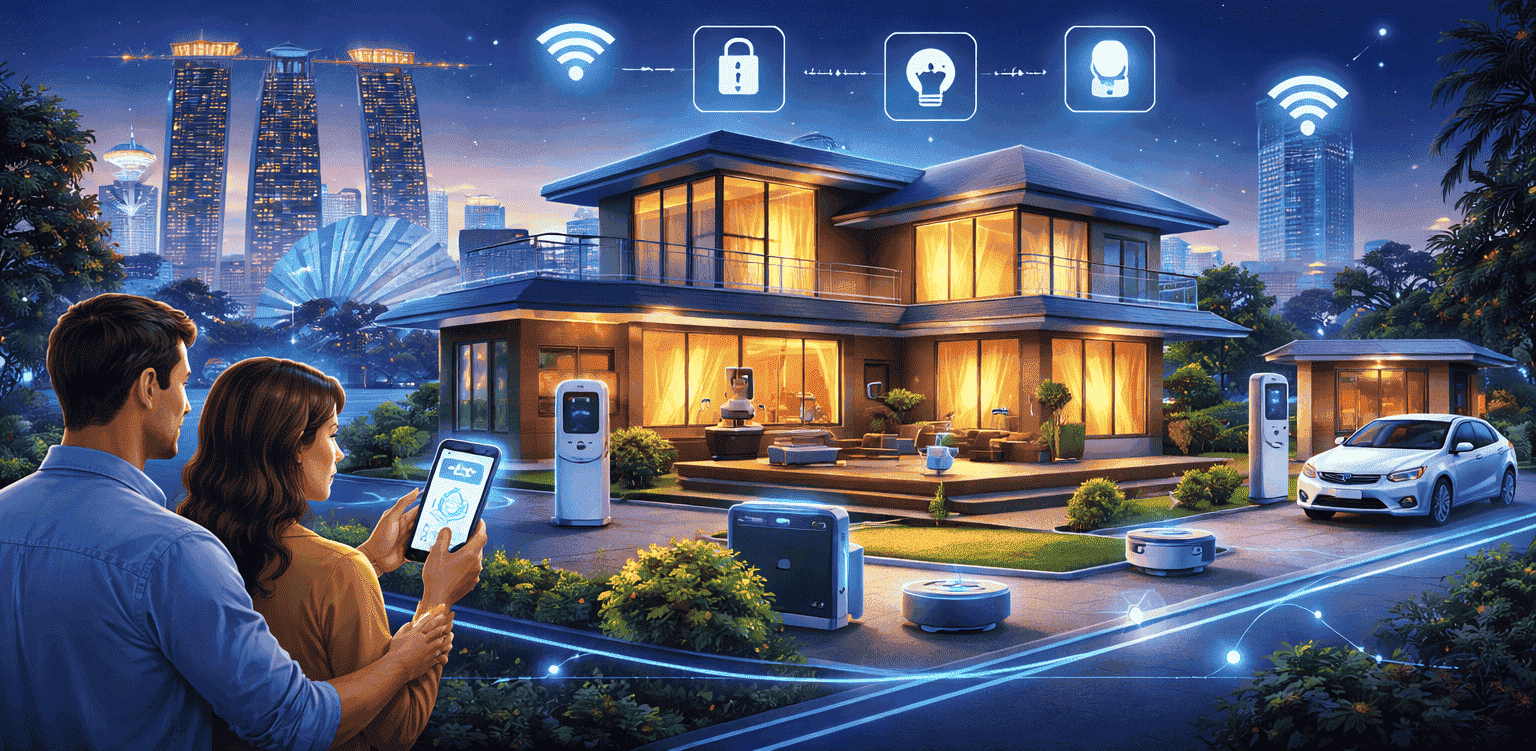
When you enter through the main entrance, you should experience the comfort of home instead of facing a list of household tasks. People today use technology that allows them to adjust home lighting, temperature and security systems through automated controls. A smart home system connects different devices around the house, enabling them to work together seamlessly. This guide walks through everything you need to know about automation across HDB flats, condominiums and landed properties in Singapore. Understanding these options helps property owners choose solutions that suit their daily lives.
Table of Contents
- What Makes a Home Smart System
- Understanding Different Property Requirements
- Essential Devices for a Connected Home
- Comparing Connected Systems to Traditional Setups
- Why Automation Appeals to Singapore Homeowners
- Choosing the Right Devices for Each Space
- Installation Approaches for Different Situations
- Making Automation Work With Daily Routines
- Conclusion
- Frequently Asked Questions
What Makes a Home Smart System
A connected home depends on multiple components that establish communication links between its individual parts. The essential structure of any modern automated system relies on these fundamental components. Property owners can create better installation strategies once they understand all the system components involved.
1. The Central Hub That Controls Everything
A main controller serves as the brain of the whole system. This device receives commands from mobile phones or voice assistants and sends instructions to lights, air conditioners, locks and cameras.
2. Wireless Communication Between Devices
Sensors and switches communicate with each other using radio signals instead of wires. Protocols like Z-Wave and Zigbee carry messages back and forth without needing to cut into walls.
3. Mobile Applications for Remote Management
A single smartphone app puts complete control at the user’s fingertips. Changes can be made from anywhere, whether someone is at work or travelling overseas.
Understanding Different Property Requirements
Each home type brings its own challenges and opportunities for automation. Smart home solutions adapt to these specific spaces without causing disruption. The right approach depends entirely on whether someone lives in an HDB flat, a condominium or a landed house.
Key property types need different automation setups:
- HDB flats and BTO units need wireless setups that follow housing board rules and avoid wall changes. Battery-powered sensors and smart switches work best here because they go in quickly without lasting changes.
- Condominiums suit security features such as smart locks, CCTV cameras and visitor access systems. These features are ideal for high-rise living, where visitor control and entry safety are important.
- Landed properties require wider network coverage and more complex installations. Gate control, outdoor security and room-by-room climate control become essential for full coverage across larger spaces.
Each property type needs its own plan for the best results. Wireless systems solve HDB limits by avoiding wall alterations and using battery-powered sensors that install quickly. Condo owners often prioritise security features and lifestyle upgrades first. Landed homes require wider network coverage and more complex installations.
Essential Devices for a Connected Home
Home automation devices come in many forms, each serving a clear purpose in daily routines. Selecting the right mix of devices turns an ordinary house into a space that responds to its residents.
1. Lighting Control That Responds to Presence
Smart switches replace old wall controls with connected alternatives. Lights turn on when someone enters a room and switch off after the space is empty.
2. Air Conditioning Management for Tropical Weather
Automated thermostats learn temperature preferences and create cooling schedules. The system adjusts itself based on who is at home and the time of day.
3. Door Locks That Offer Keyless Entry
Digital locks provide secure access through PIN codes, fingerprint scans or mobile phones. Entry logs show exactly who has entered and left throughout the day.
4. Security Cameras With Instant Alerts
CCTV units link directly to mobile apps for live viewing. Motion detection triggers notifications, allowing quick responses to unexpected activity.
Comparing Connected Systems to Traditional Setups
The differences between modern automation and traditional systems become clear in everyday use. A smart home system offers capabilities that older setups simply cannot match. The table below shows these distinctions clearly.
| Feature | Connected Approach | Traditional Setup |
| Control Method | App, voice, or automatic schedule | Manual switches only |
| Remote Access | Yes, from any place | Not available |
| Automation Capability | One command starts many actions | No automation features |
| Energy Monitoring | Track usage patterns as they happen | No view into consumption |
| Security Notifications | Instant alerts for events | No alert system |
| Device Integration | Parts work together smoothly | Each device works alone |
Organisations can achieve their goals by starting with small setups before gradually adding more devices that enable automation. Homeowners often begin their automation journey with one or two devices, then expand their system with additional equipment as their needs evolve.
Why Automation Appeals to Singapore Homeowners
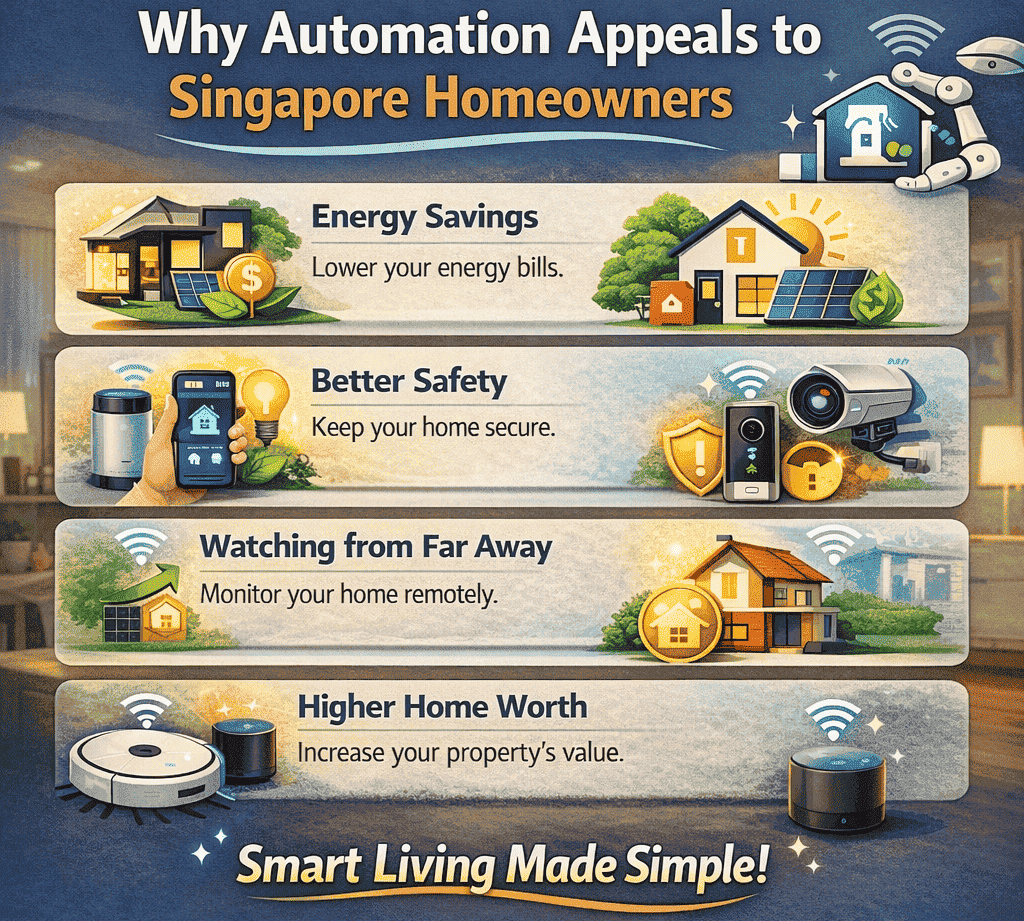
Several reasons encourage residents toward connected living across the island. Home automation in Singapore addresses specific local needs and concerns. Understanding these benefits helps property owners decide whether automation suits their way of life.
Main draws bring homeowners to automation:
- Energy savings add up when smart scheduling reduces waste by cooling only occupied rooms. Air conditioning uses significant power, and automated thermostats adjust temperatures based on who is at home.
- Better safety comes from integrated monitoring systems, where cameras, motion sensors and smart locks create multiple layers of protection for residents in high-rise buildings.
- Everyday convenience makes routines smoother as devices handle repetitive tasks automatically without requiring constant attention from busy individuals.
- Watching from far away gives frequent travellers peace of mind by allowing them to check their homes from anywhere with a quick look at a mobile phone.
- Higher home worth comes from well-integrated automation features that attract future buyers and help a property stand out in a competitive market.
High-rise residents benefit from integrated monitoring systems. Frequent travellers gain peace of mind by checking their homes from anywhere. Well-integrated automation features attract future buyers to any property.
Choosing the Right Devices for Each Space
Choosing suitable equipment requires matching features to real needs rather than chasing every new gadget. A thoughtful approach saves money and delivers better results over time.
1. Starting With Essential Items
Beginners should focus on lighting and air-conditioning control first. These two categories offer immediate benefits and provide a base for future expansion.
2. Adding Security Features Next
After learning the basics, consider adding door locks and cameras. These devices provide peace of mind and integrate easily with existing systems.
3. Expanding to Convenience Items
Curtains, blinds and entertainment systems form the final layer. These additions enhance comfort but are less essential than energy and security features.
Installation Approaches for Different Situations
For smart homes in Singapore, two main approaches are followed, depending on property constraints and budget. Choosing the right approach saves time and prevents issues before they arise.
1. Wireless Setup for Quick Deployment
Battery-powered sensors and smart plugs require no structural changes. Installation is completed within hours, and devices start working immediately after setup.
2. Wired Systems for Complete Integration
Hardwired setups offer the best reliability but require more planning. Professional installers run cables behind walls during renovation works for a clean finish.
3. Hybrid Configurations for Balanced Results
Many properties gain from mixing both approaches. Key parts receive wired connections, while less important devices work wirelessly.
Making Automation Work With Daily Routines
The true worth of a connected home shows up when devices learn and adjust to actual behaviour patterns. Automation should serve daily life, not make it harder.
1. Morning Scenes That Start the Day
One command opens curtains, turns on coffee makers, and changes temperatures. Bedroom lights brighten bit by bit to copy a natural sunrise.
2. Away Modes That Save Energy
When the last person leaves, the system powers down unneeded devices. Lights switch off, air conditioners enter standby, and security cameras turn on.
3. Evening Schedules That Prepare for Rest
As bedtime gets close, lights dim throughout the house. Doors lock on their own, and temperatures adjust for comfortable sleeping conditions.
Conclusion
A smart home system changes how people experience their daily surroundings. From energy savings to better security, the benefits touch every part of life. Print Guru helps property owners navigate the many choices available across Singapore’s different housing types. The journey starts with one device and grows from there. Choosing to automate brings convenience, safety and savings that make each day a little better.
Frequently Asked Questions
Related Blogs : Smart Home Systems in Singapore: What's Trending Now?