

How IoT is Transforming Singapore: The Smart City Revolution You Need to See
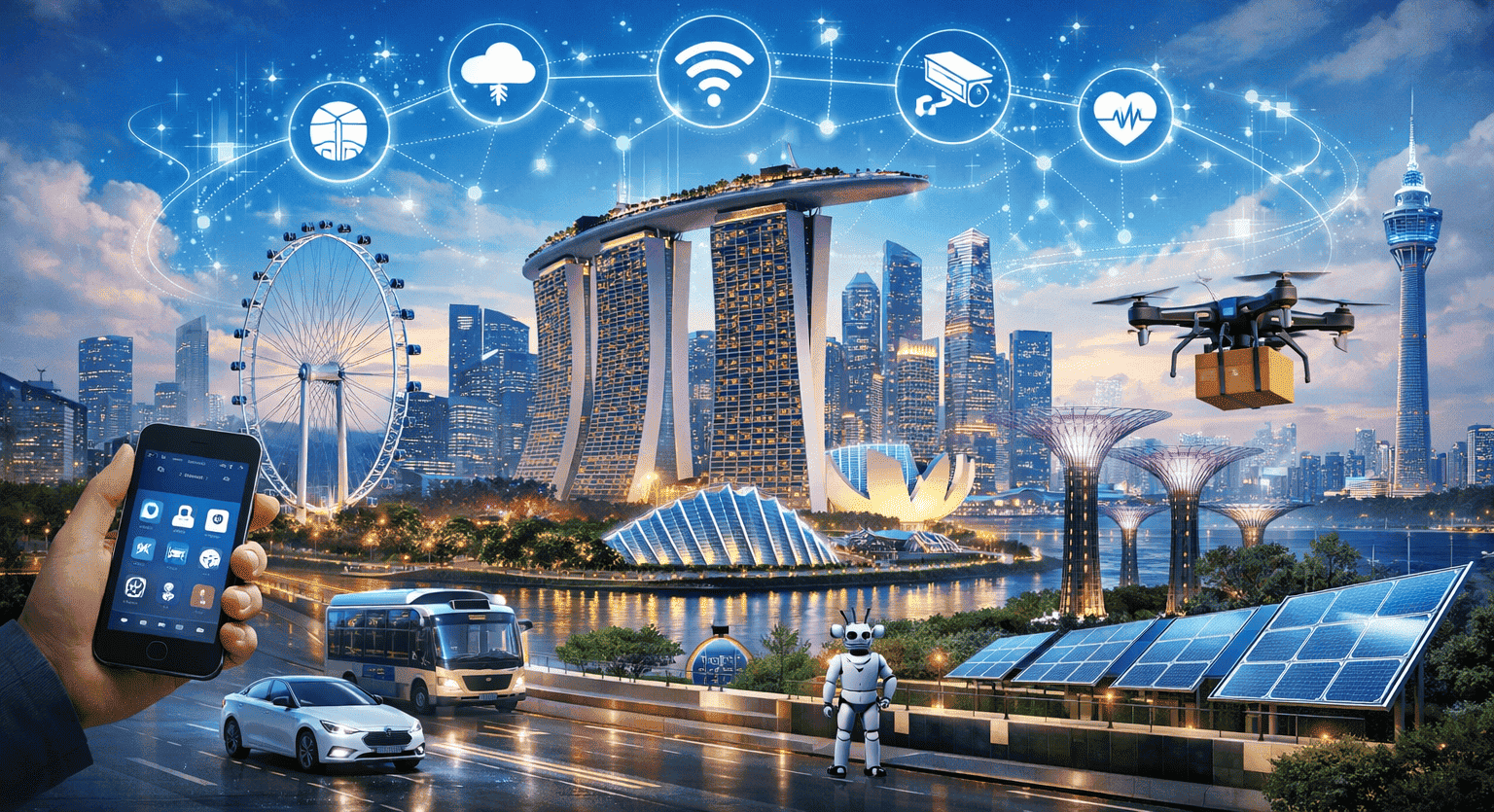
Look around any neighbourhood across the island, and small changes appear everywhere. Traffic flows more smoothly during busy hours. Buildings adjust their energy use without anyone flipping switches. Waste bins notify collection crews when they are full. This quiet shift comes from IoT in Singapore, a network of connected devices that share information to make city living easier. This guide explores how smart technology is changing daily life across housing estates and business areas.
Table of Contents
- Understanding the Smart City Concept
- Key Technologies Driving the Revolution
- Transforming Daily Life Across Sectors
- Industrial Applications Reshaping Operations
- Comparing Connected Systems to Old Ways
- Security for Connected Systems
- When AI Meets Smart Devices
- Earth Benefits of Smart Systems
- Looking Ahead at What Comes Next
- Conclusion
- Frequently Asked Questions
Understanding the Smart City Concept
A smart city uses information technology to improve how systems operate. Connected devices collect data from thousands of points across the city. This information helps city workers make better decisions about where to deploy resources. Understanding how these components fit together helps anyone see the bigger picture of urban change.
Main parts make a smart city work well:
- Data collection takes place through sensors on buildings, roads and public spaces. These small devices measure temperature, movement and light levels without needing constant human attention.
- Information moves through networks that link thousands of points across the city. Cables and wireless towers carry this data to central systems where computers analyse it.
- City workers use data to make better decisions about resources. Planners identify which neighbourhoods need more support before problems become serious.
Sensors placed around the city collect live data about their surroundings. Each sensor sends its findings to central systems for analysis. City planners study emerging patterns to replace guesswork with precise action.
Key Technologies Driving the Revolution
Several new technologies work together to make this change possible. Each technology plays its own part in the bigger system.
Main technologies power the smart city change:
- Smart sensors monitor everything from air quality to available parking spaces. These small devices attach to lamp posts and buildings, operating continuously without frequent battery changes.
- IoT platforms act as central hubs where data from different sources comes together. This software converts inputs from various device types into a common format.
- Artificial intelligence programmes analyse the data flowing through connected systems. Machine learning identifies unusual patterns that may indicate equipment failures or security breaches.
Smart sensors in Singapore monitor everything from air quality to available parking spaces. An IoT platform in Singapore serves as the central point where data from different sources comes together. Machine learning programmes analyse data flowing through connected systems to identify unusual patterns.
Transforming Daily Life Across Sectors
Smart technology reaches into nearly every part of city living. People experience these changes through smoother journeys and more comfortable buildings.
1. Smarter Transport Networks
Traffic lights adjust their timing based on actual traffic flow rather than fixed schedules. Bus arrival displays show accurate predictions as buses report their positions in real time. Commuters spend less time waiting and more time moving.
2. Better Building Management
Office buildings use occupancy data to adjust heating and cooling systems. Empty floors use less energy, while occupied areas remain comfortable. Building managers see significant reductions in power bills.
3. Stronger Public Safety
Emergency teams receive live information about incidents as they occur. Camera networks help dispatchers understand situations before officers arrive. This readiness leads to faster and more effective responses to urgent calls.
Industrial Applications Reshaping Operations
Factories and warehouses were among the first to use smart technology. Industrial IoT in Singapore helps manufacturers compete in global markets through reduced downtime and faster operations.
Key factory applications deliver the greatest returns:
- Equipment monitoring prevents costly breakdowns through early detection. Vibration sensors identify small changes that signal potential failures, allowing maintenance teams to act before breakdowns occur.
- Warehouse tracking locates items instantly without manual searching. Each pallet carries a tag that continuously transmits its location, speeding up order fulfilment significantly.
- Supply chain visibility follows raw goods from delivery through the finished product. This full view helps makers find blockages and respond faster when problems arise.
Vibration sensors on machines detect early warning signs of failure. Each pallet transmits its location continuously. Manufacturers track materials from delivery through production for full visibility.
Comparing Connected Systems to Old Ways
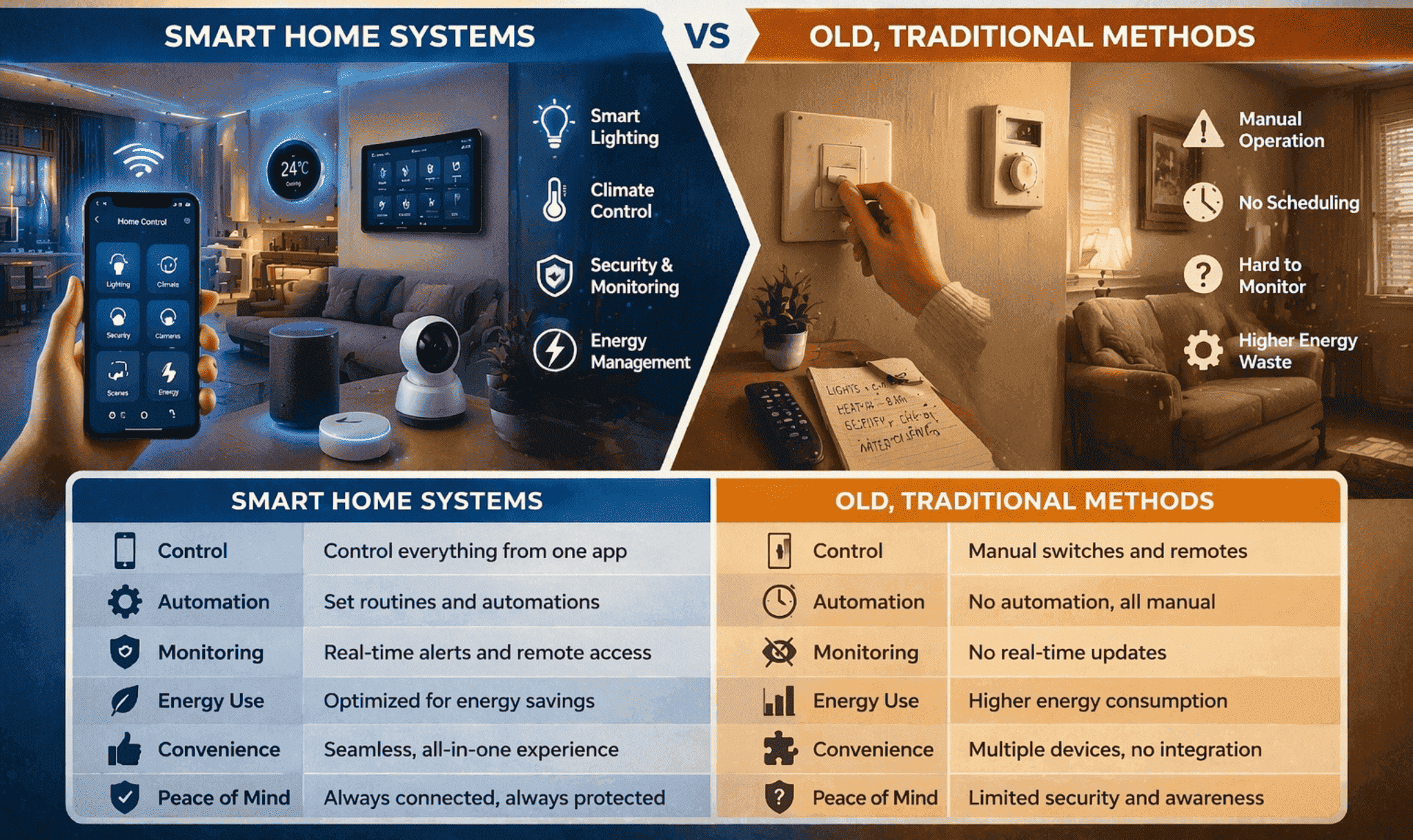
The differences between smart systems and old methods become clear when looking at key points. The table below shows these contrasts.
| Work Area | Smart Approach | Old Method |
| Upkeep | Warnings before failures happen | Set a schedule or fixes after breakdowns |
| Resource Use | Data-based choices in real time | Set schedules no matter what is needed |
| Problem Response | Auto-finding with instant notice | Manual checking with slow reporting |
| Data Gathering | Non-stop auto watching | Occasional manual checks |
| System Updates | Remote fixes without visits | On-site worker visits needed |
Smart systems give speed and correctness that old methods cannot match. The ability to find issues on its own cuts down time lost to breakdowns by a lot.
Security for Connected Systems
Keeping the large amount of data moving through these networks secure requires constant effort. IoT security in Singapore follows strict regulations to protect private information.
Safety layers protect every smart system:
- Encryption scrambles every message moving between devices and computers. Only authorised systems hold the keys to decode this information, preventing eavesdropping on the network.
- Identity verification checks each device before granting network access. Unknown sensors are denied entry to data or control systems, blocking unauthorised devices.
- Regular updates close security gaps as they are discovered by manufacturers. Network operators apply patches quickly to prevent attackers from exploiting known vulnerabilities.
Every message between devices is converted into unreadable code. Each device must prove its identity before joining the network. Manufacturers release software updates when security flaws are found.
When AI Meets Smart Devices
AI and IoT in Singapore form a strong combination that enhances the benefits of both technologies. Artificial intelligence adds analytical power to the data collected by smart devices.
Abilities emerge when AI meets smart devices:
- Pattern detection identifies hidden anomalies across the entire network. Machine learning programmes raise instant alerts when behaviour deviates from expected patterns.
- Predictive analysis forecasts future needs using historical data. Systems estimate waste collection requirements and spikes in energy use before they occur.
- Automated responses act without delay when specific conditions occur. A leak sensor may shut off water valves automatically, preventing damage during slower human responses.
Machine learning programmes study normal behaviour patterns across the entire network. Historical data helps predict future service needs across the city. When certain conditions occur, the system takes predefined actions without human intervention.
Earth Benefits of Smart Systems
Smart technology supports sustainability goals across the island. Resource consumption decreases as systems operate more efficiently.
Earth benefits come from smart systems:
- Energy savings are achieved through smarter building and lighting management. Buildings adjust cooling based on room usage, while street lights dim when no vehicles pass beneath them.
- Water conservation is achieved through early leak detection along pipelines. Pressure sensors identify small leaks before they become major bursts, allowing repair teams to act quickly.
- Waste reduction follows optimised collection routes for garbage trucks. Trucks visit only bins that require emptying, reducing fuel consumption while serving the same areas.
Buildings adjust lighting and cooling based on actual room usage. Pressure sensors along water pipes detect small leaks before they become major bursts. Garbage trucks visit only bins that require collection instead of following fixed routes.
Looking Ahead at What Comes Next
New ideas continue to emerge without slowing down. New technologies will add new capabilities to existing networks.
1. 5G Networks Enabling Faster Responses
Fifth-generation wireless technology significantly reduces communication delays. Vehicles can receive collision warnings in milliseconds rather than seconds. This speed makes real-time coordination possible at scales never seen before.
2. Edge Computing Reducing Reliance on Central Computers
Some data processing is moved closer to where devices collect information. Local processing reduces the amount of data travelling to central computers. This distribution makes systems more resilient against network disruptions.
3. Digital Twins Making Copy Versions
City planners build detailed computer models of physical systems before making changes. They test changes in the copy world before putting them into the real world. This technique stops costly mistakes in real systems.
Conclusion
IoT in Singapore represents a major change in how the city operates every day. Traffic flows more smoothly because signals respond to real conditions on the roads. Buildings waste less power because systems know exactly which rooms are occupied at any moment. Public services arrive when needed because data guides where they should be deployed. Print Guru helps organisations navigate this changing landscape.