

Complete Smart Home Setup for Singapore Condominiums: Devices, Installation & Tips
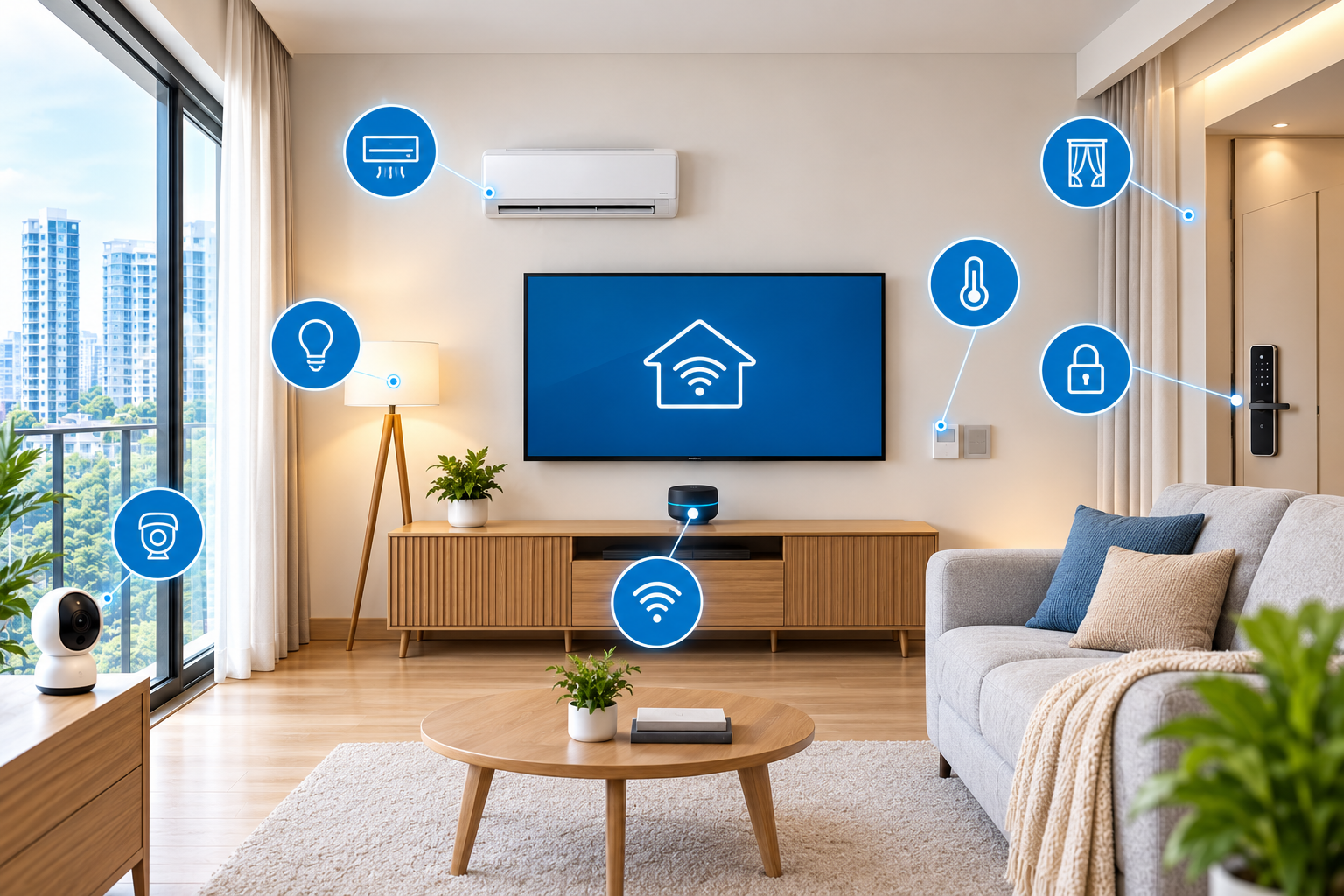
A smart home should make daily life easier, not give you another set of apps and switches to manage. For condo owners in Singapore, the right setup can bring lighting, locks, air-conditioning, curtains and appliances under one simple system.
The challenge is choosing devices that work well together. Without proper planning, you may end up with separate apps, weak Wi-Fi coverage or devices that cannot communicate. Installation needs and future upgrades also deserve attention before you start buying.
A well-planned smart home in Singapore can avoid these problems and make everyday living more convenient. From choosing essential devices to planning installation, managing energy and creating useful routines, this guide will help you build a connected condo that is simple to control, secure and easy to expand.
Table of Contents
- Why Smart Homes Make Sense in Singapore Condos
- Essential Smart Home Devices in Singapore
- Smart Home Device Comparison for Condos
- How to Plan Your Smart Home in Singapore
- Smart Home Installation: Step-by-Step Guide
- How a Smart Electricity Meter Helps Manage Energy
- Practical Smart Home Tips for Condo Owners
- Common Smart Home Installation Mistakes to Avoid
- Conclusion
- Frequently Asked Questions
Why Smart Homes Make Sense in Singapore Condos
Condo living in Singapore comes with space limits and renovation rules to consider. Depending on the work involved, owners may also need to check BCA guidance for condo owners and confirm any requirements with their developer or MCST before making changes to the unit.
Here’s where a smart home can help:
- Ease of access: Lighting, curtains, and compatible devices controlled by one system.
- Safety: With the use of smart locks, detectors and surveillance cameras, one is able to track their activities.
- Management of power consumption: Using a smart electric meter or energy monitor, one can learn about electricity usage and areas of wastage.
- Space efficiency: Automated controls and routines in smart homes will facilitate space efficiency.
The best setup is one that fits your condo, daily routine and future needs rather than adding technology you rarely use.
Essential Smart Home Devices in Singapore
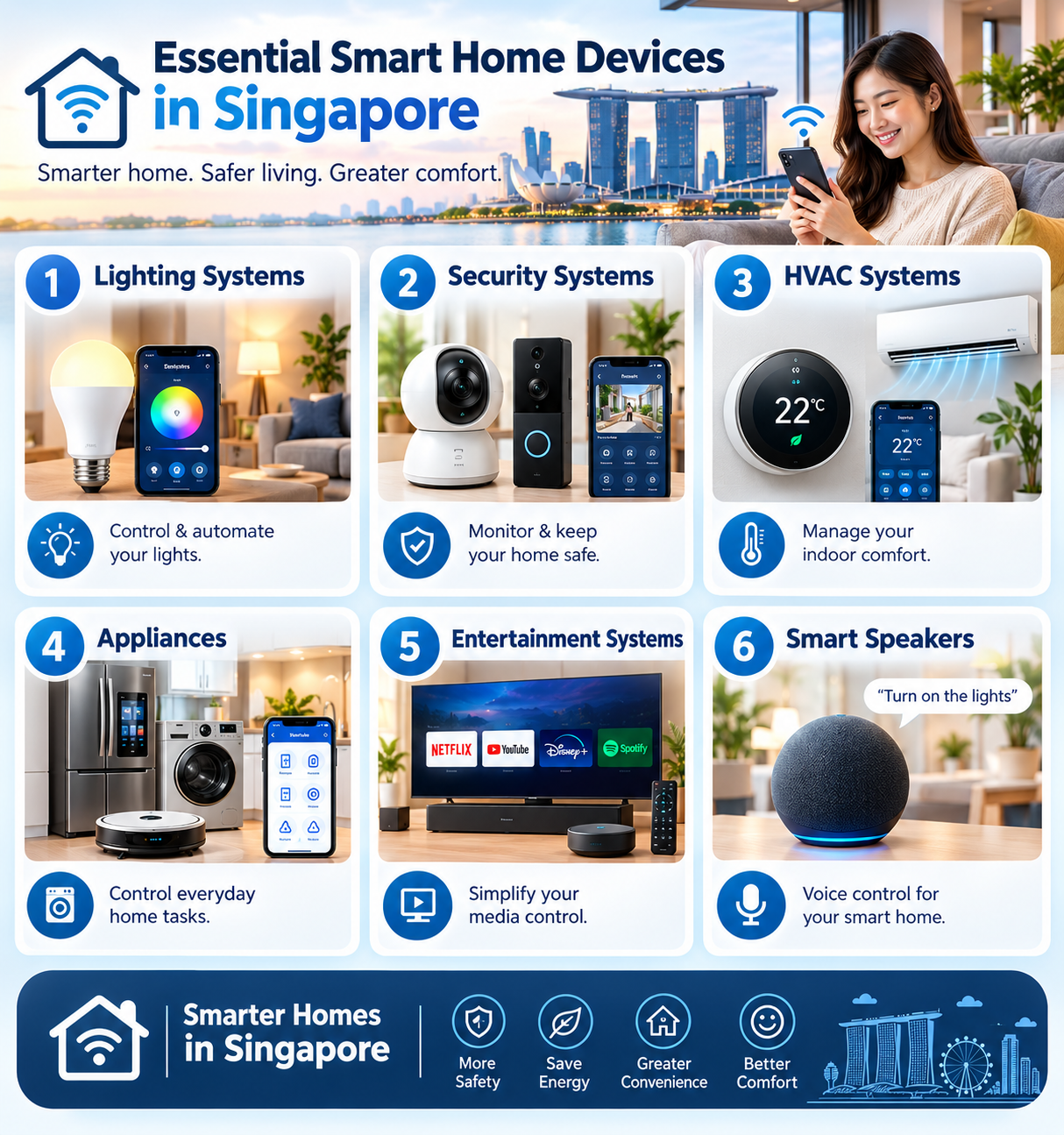
The right smart home devices in Singapore can make condo living safer, easier and more comfortable. Start with devices that handle everyday tasks and work well with your existing home setup.
1. Lighting Systems
Smart lighting systems allow homeowners to control and automate lights for greater convenience. They can also help manage energy use while creating the right ambience at home.
2. Security Systems
Smart security systems help homeowners monitor their property and improve overall home safety. Connected security devices provide greater control and visibility, even when away from home.
3. HVAC Systems
Smart HVAC systems make it easier to manage indoor temperature and comfort. Automated controls can adjust cooling based on household needs and preferred settings.
4. Appliances
Smart appliances can be connected to a home automation system for easier everyday management. They allow users to control household functions conveniently through connected devices.
5. Entertainment Systems
Smart entertainment systems integrate televisions, speakers and other media devices into one connected setup. This makes controlling home entertainment simpler and more convenient.
6. Smart Speakers
Smart speakers provide voice-based control for compatible smart home devices. They can act as a convenient central point for managing different connected functions around the home.
Smart Home Device Comparison for Condos
Each smart device serves a different purpose, so choosing the right mix can make your condo easier to manage. The table below compares common home automation devices and shows where they work best.
| Device | Main Purpose | Best Location | Useful Automation Example |
| Smart lighting | Control and automate lighting | Living room, bedroom, hallway | Turn lights off when no motion is detected |
| Smart locks | Secure and manage home access | Main entrance | Lock the door when you leave home |
| Smart sensors | Detect movement or changes | Doors, windows, kitchen | Switch on lights when motion is detected |
| Smart plugs | Control connected appliances | Living room, bedroom, kitchen | Turn appliances off at a set time |
| Smart cameras | Monitor your home | Entrance and indoor areas | Send an alert when motion is detected |
| Energy monitors | Track electricity use | Electrical panel or connected devices | Identify periods of high energy use |
How to Plan Your Smart Home in Singapore
A good smart home in Singapore starts with simple planning. Consider your needs, device compatibility and Wi-Fi coverage before installation.
Identify Your Daily Needs
Decide whether you want better security, comfort, convenience or energy control. Focus on features that make daily tasks easier.
Choose a Compatible Smart Home Ecosystem
Smart devices may use Wi-Fi, Zigbee or Z-Wave, while Matter can help compatible products work across different smart home platforms.
Check Your Condo’s Wi-Fi Coverage
Make sure your router provides a stable signal across your condo. Fix Wi-Fi dead zones that may affect device performance.
Plan for Future Expansion
Start with key rooms and essential devices first. You can add more home automation devices as your needs change.
Smart Home Installation: Step-by-Step Guide
A planned installation helps your smart home run smoothly and reduces connection issues. Follow these steps to set up your home automation devices correctly.
Step 1 – Plan Devices Room by Room
Decide which devices you need in each room based on your daily routine. Start with high-use areas such as the entrance, living room and bedroom.
Step 2 – Check Wiring and Installation Requirements
Check whether smart switches, locks and other devices need extra wiring, power points or built-in installation. For condo units, consider any renovation requirements that may apply before electrical or installation work begins.
Step 3 – Install the Smart Home Hub
Set up the hub in a central location with a stable network connection. It can help compatible devices communicate and run automated routines.
Step 4 – Connect and Test Each Device
Add each device to your chosen smart home system and test its main functions. Fix connection problems before moving to the next device.
Step 5 – Create Scenes and Automation Routines
Create simple routines for tasks you repeat each day. For example, a “Good Night” scene can turn off lights and lock compatible doors.
Step 6 – Test Manual and Remote Controls
Check that switches and other manual controls still work as expected. Then test app-based controls to make sure you can manage supported devices remotely.
How a Smart Electricity Meter Helps Manage Energy
A smart electricity meter helps you understand how much electricity your condo uses and when consumption is highest. This makes it easier to spot energy-use patterns and make better choices about everyday appliance use.
When combined with compatible home automation devices, energy monitoring becomes more useful. For example, you can schedule selected lights or appliances to switch off when they are not needed. Over time, these small changes can help reduce unnecessary electricity use and improve energy management at home.
Practical Smart Home Tips for Condo Owners
A smart home should be as simple as possible and suit the user's needs and lifestyle. Here are some tips that will make your smart home easier to control and use over time.
- Think about starting with essential rooms: Begin by automating one or two important rooms, such as the living room and front door, before moving on to others.
- Name devices logically: It's better to give logical names to each connected device, like "Living Room Lights" and "Bedroom Curtains".
- Check automation before adding more devices: First try out new automations for a week or two before getting more devices and making more complicated scenes.
- Carefully think over the location of devices: Put switches, sensors and other devices where it is most convenient for you.
The simplicity and careful planning of the smart home will increase its usability without overcomplicating anything.
Common Smart Home Installation Mistakes to Avoid
Small errors in planning will make your smart home less usable and even more expensive when it comes to upgrading your devices. Don’t commit these typical mistakes when designing your smart home.
- Buying Incompatible Devices: Make sure that all the devices are compatible with your preferred smart home system.
- Using Too Many Separate Apps: Select devices which can be controlled from one single app.
- Ignoring Manual Controls: Have some manual controls on hand in case there are guests or if your phone is not at hand.
- Automating Tasks You Do Not Need: Automate things that will save you time or make some daily tasks easier.
- Forgetting About Future Upgrades: Buy a smart home system that can be upgraded later with more devices as needed.
Careful planning from the start can make your smart home easier to manage and expand.
Conclusion
A well-planned smart home in Singapore can make condo living more comfortable, secure and convenient. Start with useful home automation devices that match your daily needs, then expand your system as those needs change.
Good device compatibility, stable Wi-Fi and proper installation help everything work together smoothly. Smart lighting, locks, sensors and energy monitoring can also make everyday tasks easier to manage.
L3 Homeation provides smart home solutions for modern Singapore homes and condominiums. Speak with our team to explore a smart home setup that suits your condo, daily routine and future needs.
Frequently Asked Questions
Related Blogs : Smart Home System in Singapore – Complete Home Automation Guide (2026)